

Thursday, December 2, 2021
Washington Today (12-2-21): House passes CR to avert gov't shutdown; Senate GOP may block
Today's program looks at the temporary federal government funding bill, President Biden on steps to slow spread of COVID-19 omicron variant and U.S. confronting Russia over Ukraine. Interviews with The Hill's Nathaniel Weixel and Heritage Foundation' […]
Read More
Examining Reaction Might Hurt American International Competition
President Biden has been selling his plan to invest in universal pre-school and free community college on international competitiveness grounds, telling a New Jersey audience on October 25, “Any nation that out-educates us will outcompete us.”
Mostly absent from the discussion about expanded access has been talk about testing and accountability. In fact, recent trends in the U.S. have been in the opposite direction. The 2015 Every Student Succeeds Act lowered the stakes attached to nationally mandated state tests. Since then, the gains in student achievement that had been seen under the more rigid No Child Left Behind Act of 2001 have leveled off. The causes of that are debated, but some see a link (see “What to Make of the 2019 Results from the ‘Nation’s Report Card’”).
Colleges are also moving away from the use of standardized testing in admissions (see “Should State Universities Downplay the SAT?” forum, Summer 2020). K-12 school systems are moving away from the use of standardized tests for screening and admissions to selective schools and programs amid the pandemic and heightened concern about racial bias (see “Exam School Admissions Come Under Fire Amid Pandemic,” features, spring 2021).
Some experts are voicing concern that a pell-mell move away from testing could hurt America’s standing, especially as America’s global competitors are moving in the opposite direction. China and India, the world’s two most populous countries, have placed standardized exams at the core of their respective education systems, with the high-stakes Gaokao and CBSE exams determining admission into the two countries’ elite universities. Testing is so sought after by students in both countries that American testmakers see them as potential growth markets. The College Board has sponsored content in one of India’s leading newspapers to promote the Advanced Placement (AP) program and its associated tests as a way to strengthen learning and “conceptual understanding.”
“Not all standardized testing is created equal. But, in the case of instances like the SAT, annual state tests, and gifted admission tests, it’s fair to fear that reducing the role of assessment will have negative consequences,” said Frederick M. Hess, the director of education policy studies at the center-right American Enterprise Institute. How worried people should be, he said, depends on “what the replacement looks like, and how aware decision-makers are of the risks.”
Hess, an executive editor of Education Next, was a member of a 2012 Council on Foreign Relations task force on U.S. Education Reform and National Security that concluded “Educational failure puts the United States’ future economic prosperity, global position, and physical safety at risk.” In 2012, standardized testing was under some pressure, but the pandemic and the recent push for racial equity have accelerated the move away from testing since then.
Chester E. Finn, Jr., a Department of Education official during the Reagan administration who is president emeritus of the Thomas B. Fordham Foundation, wrote recently, “As other countries’ children surpass ours in core skills and knowledge, we face ominous long-term consequences for our national well-being, including both our economy and our security. But what’s even more worrying than the achievement problem is the loss of will to do much about it and the creative ways we’re finding to conceal from ourselves the fact that it’s even a problem.”
When asked about how the elimination of standardized testing would affect the United States, Finn said in an interview that he thinks “the United States will be worse off over time, but it would be a number of years before we saw the damage, and by then, the decline will be very hard to reverse.” He also noted that “people in the United States are now competing with people from all around the world,” and that the country’s past economic competitiveness was driven by the fact that “we simply had more education than anyone else, but this is no longer the case, even when just looking at high school graduation rates.”
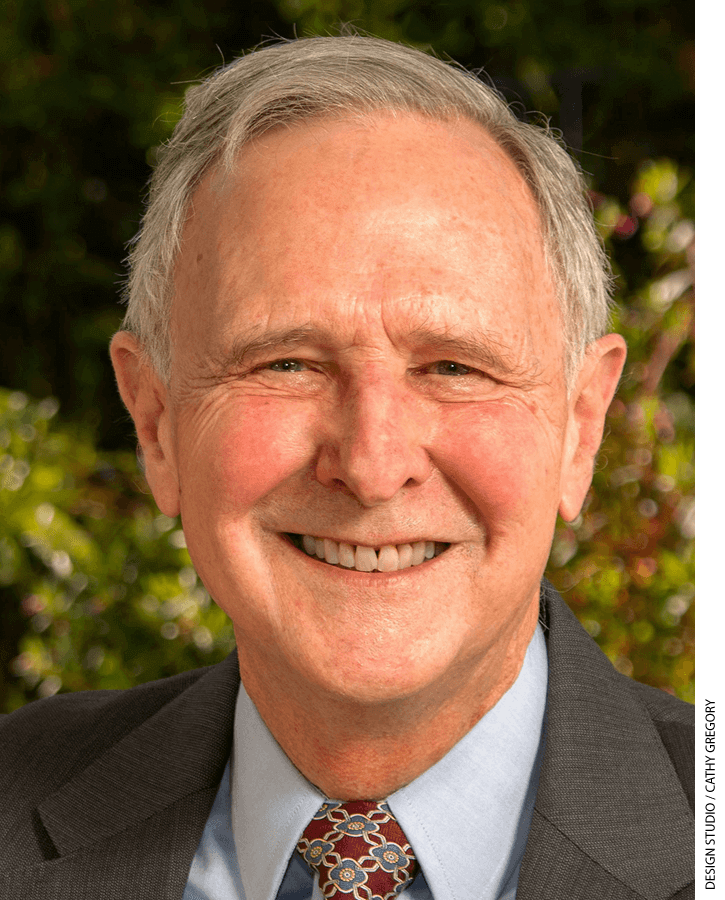
Education has already been shown to be an important determinant of countries’ economic outcomes. A senior fellow at Stanford’s Hoover Institution, Eric Hanushek, was recently awarded the 2021 Yidan Prize – the world’s most prestigious prize in the field of education – in part for his research on this topic. Hanushek and his co-authors found that long-run growth in nations’ GDP is largely shaped by the skills of their populations, which, in turn, is something that can be measured by standardized, international assessments focusing on mathematics and science. Hanushek said in an interview that “various tests have shown that education in the United States is below average in comparison to other wealthy countries,” showing a need for action. He also notes that while testing and test results often do not directly lead to policy changes in the United States, they can still “influence actions at the individual level, with both parents and schools that want better performance paying attention and responding to poor test scores.” In other words, standardized tests not only provide a measure of the problem at hand, but also serve as a call to action for those who are most concerned with — or most connected to — the problem.
Throughout the United States, efforts are underway to eliminate or substantially reduce the role of standardized testing at all levels of the education system. According to FairTest, a research and advocacy organization that works to reduce the use of standardized testing, nearly 1,800 four-year U.S. colleges and universities will not require standardized tests for the 2022 admissions cycle, while 85 will not consider test scores even if students choose to submit them. Even the College Board, which administers – and derives most of its revenues from – the SAT exam and the Advanced Placement program, has decided to stop offering SAT Subject Tests, which previously allowed students to demonstrate specialized knowledge in various subjects to enhance their college applications.
This trend is also prevalent at the state and local levels. Earlier this year, the University of California system announced that it would permanently stop considering SAT and ACT scores for admissions, while San Francisco replaced an exam with a lottery for admission to the city’s prestigious Lowell High School. Similarly, New York City and Boston have both recently engaged in extensive political conversations around removing standardized exams from the admissions process for selective high schools. Boston officially decided to permanently reduce the exam’s weight by 40 percent while simultaneously moving away from a purely grades- and exam-based system of ranking prospective students.
The movement away from standardized testing is rooted in the notion that standardized tests are inherently unfair measures of student achievement and potential, and thus, should not be used in judging students, much less in determining admission into selective universities.
The interim executive director at FairTest, Robert Schaeffer, said in an interview that “standardized tests should not be the sole or primary factor used to make high-stakes decisions,” and alluding to the argument that such tests do not align with curricula, says that “teachers’ assessments of students, which are based on the material being taught in classrooms, should be given the heaviest weight.”
From a more practical standpoint, Nicholas Lemann, a professor at Columbia University and author of the 1999 book The Big Test, told me that “at selective universities, of which there are only 50 or so out of thousands, the admissions criteria have never been fully academics-based, but even if they were, there is enough data from sources like high school transcripts and AP tests to evaluate students.”
Historically, the international competitiveness argument—both on national security and on economics—has worked domestically to drive education legislation, investment, and reform.
When the Soviet Union launched the Sputnik satellite in 1957, America responded with the 1958 National Defense Education Act, which channeled funding with a focus on math and science to colleges and universities. The 1983 report “A Nation at Risk,” observed, “We live among determined, well-educated, and strongly motivated competitors. We compete with them for international standing and markets.” It went on, “The risk is not only that the Japanese make automobiles more efficiently than Americans and have government subsidies for development and export. It is not just that the South Koreans recently built the world’s most efficient steel mill, or that American machine tools, once the pride of the world, are being displaced by German products. It is also that these developments signify a redistribution of trained capability throughout the globe.” That report helped build the case for state-by-state comparisons as part of the “nation’s report card,” or National Assessment of Educational Progress.
Recent headlines echo in some ways the concerns of the late 1950s and early 1980s. The chairman of the joint chiefs of staff, General Mark Milley, said in a Bloomberg Television interview with David Rubenstein that China’s recent test of a hypersonic missile was “very close” to a “Sputnik moment.” The Commerce Department recently announced that the U.S. trade deficit in goods and services had hit a record high, measured on a monthly, seasonally adjusted basis. Some also view India as posing a substantial economic threat. Though India’s public education system is troubled, there are boarding schools serving the country’s elite, and the prestigious Indian Institutes of Technology train highly skilled engineers. In particular, Indian nationals reportedly receive approximately 70 percent of all H1-B visas, which the U.S. grants to high-skilled foreign workers, the vast majority of whom are hired for jobs in STEM. The program requires employers to certify that American workers can’t be found to fill the positions.
The CIA is reorganizing to combat what the CIA director calls “the most important geopolitical threat we face in the 21st Century, an increasingly adversarial Chinese government.” Will the U.S. education world also adjust to these contemporary developments? Or will anti-test stances gain further traction? Eliminating accountability testing will leave the United States without a gauge of how much its students have learned – a fact that is often ignored by those claiming that eliminating exams will lead to better outcomes.
Lemann says that backing off the use of standardized tests for college admissions might actually not be that significant: “the overwhelming majority of bachelor’s degree-granting institutions in the United States are not highly selective, so eliminating standardized tests would only affect the selection of elites – and even then, only marginally, because of the vast amount of other academic data that is available.” Finn, though, said, “there are not many elite universities, but the few that do exist are highly regarded in the U.S. and around the world, so their admissions processes matter a lot.”
At the K-12 level, alternatives to standardized testing, such as teacher-issued grades, school inspections, or community surveys, all have their own drawbacks. Despite the high-profile recent victories of anti-testing advocates, surveys, including the Education Next survey of public opinion, show strong and consistent support among the general public, for a continuation of the federal requirement of annual testing in math and reading.
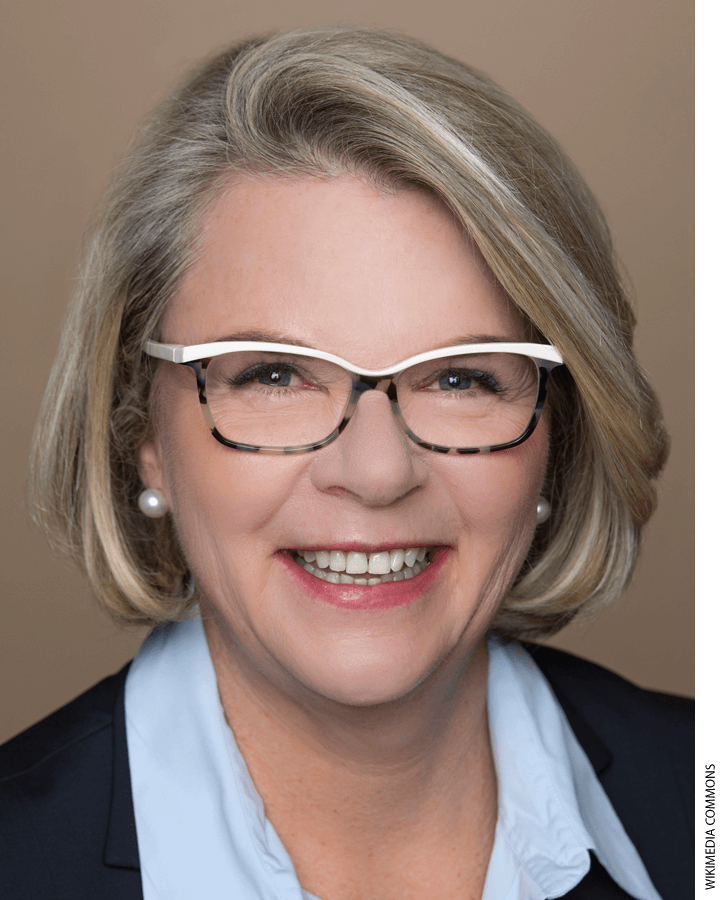
That support is sufficiently strong that some experts, such as a Margaret Spellings, who served as Secretary of Education in the George W. Bush administration, downplayed the risk that America will abandon testing wholesale, rather than just make needed adjustments in places where it’s been clumsily used. Spellings noted in an interview that the current Secretary of Education, Miguel Cardona, has not been anti-testing. After taking office, Cardona told states they needed to administer annual tests notwithstanding the pandemic, declining some requests to waive the testing requirement. Spelling told me she is “confident that the United States will not move away from using assessments to gauge student achievement.” For the sake of the country’s global competitiveness, let’s hope she’s right.
Yanxi Fang is a student at Harvard College concentrating in government.
The post Testing Backlash Could Hurt American Global Competitiveness appeared first on Education Next.
[NDN/ccn/comedia Links]
News.... browse around here

The Weekly Podcast: 30 Years of asking the abortion question at SCOTUS confirmation hearings
This week's "The Weekly" podcast looks back at 30 years of Supreme Court justice nominees being asked their positions on abortion and Roe v. Wade. This topic is particularly noteworthy right now because the Supreme Court recently heard an oral argum […]
Read More
Wednesday, December 1, 2021
Washington Today (12-1-21): Supreme Court hears challenge to Roe v. Wade
Today's program looks at the Supreme Court oral argument on the Mississippi abortion law, first COVID-19 omicron case in the U.S. and VP Kamala Harris chairing her first National Space Council meeting. Interview with Bloomberg Law's Jordan Rubin (9). […]
Read More
Dr. Anthony Fauci on First U.S. COVID-19 Case Caused by Omicron Variant
Dr. Anthony Fauci at the White House Press Briefing: "The California and San Francisco Departments of Public Health and the CDC have confirmed that a recent case of COVID-19 among an individual in California was caused by the omicron variant."
Read More
President Biden: "I don't think about the former president."
Q: "Mark Meadows has written a book revealing that President Trump tested positive for COVID a few days before your first debate. Do you think the former president put you at risk?"
President Biden: "I don't think about the former president." […]
Read More
Schools Can Help with the Young People Mental Health Situation

The suicide rate for persons aged 10 to 24 increased nearly 60% over a decade-long span ending in 2018, making suicide the second leading cause of death for teens, the federal Centers for Disease Control and Prevention reports.
A White House fact sheet issued in October 2021 says the Covid-19 pandemic has made matters worse. It cites “alarming rates of behavioral health needs among school-age youth, with significant increases in the number experiencing moderate to severe anxiety and depression.”
”Mental health emergencies among young people have increased across the board. In 2020, there was a 24 percent increase in emergency room visits for mental health reasons for children ages 5 through 11, and a more than a 30 percent increase in visits for those between 12 and 17 years old,” the White House fact sheet says. In October, First Lady Jill Biden and Surgeon General Vivek Murthy visited Michigan for “a listening session focused on youth mental health.”
What, if anything, can schools do about it? Some teachers are skeptical, but experience shows that schools that work at it can make dramatic improvements on this front. With school districts newly awash in federal Covid relief money, the best way to invest in improving mental health is now an urgent, timely policy question. And many researchers and advocates say that if schools ignore student mental health, academic achievement will also suffer.

“Academics and mental health are intimately connected,” said Sara Gorman, director of research and knowledge dissemination at The Jed Foundation, a nonprofit focused on suicide prevention for teens and young adults. “Students suffering with mental health do not do well in school. They do not come to school, perform well, or graduate. There are key educational outcomes schools are looking for, and without addressing mental health, there is no way they will meet these.”
School-based mental health has been building as an issue for decades, but the pandemic and the suicide statistics have brought increased attention.
“The truth is, schools have been the de facto mental health provider for children and young adults for a long time now,” said Patricia Graczyk, an assistant professor of clinical psychology at the University of Illinois at Chicago. She pointed to research conducted over 20 years ago and published in the Clinical Child and Family Psychology Review and Health Affairs journals that found that only one in five students who need mental health services receive them. Among those who do obtain help, 75% receive the services solely through their schools.
Sarah Broome runs a boarding school for at-risk students in Baton Rouge, Louisiana, Thrive Academy. When she founded the public school in 2011, she didn’t initially focus on student mental health. Eventually, she found the school’s first crop of graduates were having trouble when they left the residential school. After a rethink that included implementing professionally run group therapy and a universal screening tool, mental-health emergency-room visits by students at the school, which serves at-risk students, declined to one in a year from 30, even amid the Covid pandemic.
Broome said leaving mental health issues untreated can interfere with student learning. “You can have the best teacher in the world with award-winning skills and the best content that academia has to offer, but they simply cannot and will not be able to make that content land until mental health is addressed.”

A 2016 federal ruling allowed schools to pay for health services with Medicaid funds even if students don’t have an Individual Education Plan under the Individuals with Disabilities Education Act. Louisiana used this rule change to pay for an increase to 214 school-based mental health providers from 27 statewide, Broome said. “Only in the last five to seven years have we focused on this outside of special ed, so there is room to grow,” she said.
Some teachers voice concern about being forced by the new focus on mental health into roles for which they are unprepared. “Teachers are not mental health professionals, counselors, or clergy. They should not be asked—nor is there any reason to expect them—to perform competently in those roles,” wrote Robert Pondiscio, a senior fellow at the American Enterprise Institute. He quoted another teacher, Greg Ashman: “Teachers are not therapists and the more we venture into an area for which we are not trained, the greater the chance that we mess it up.”
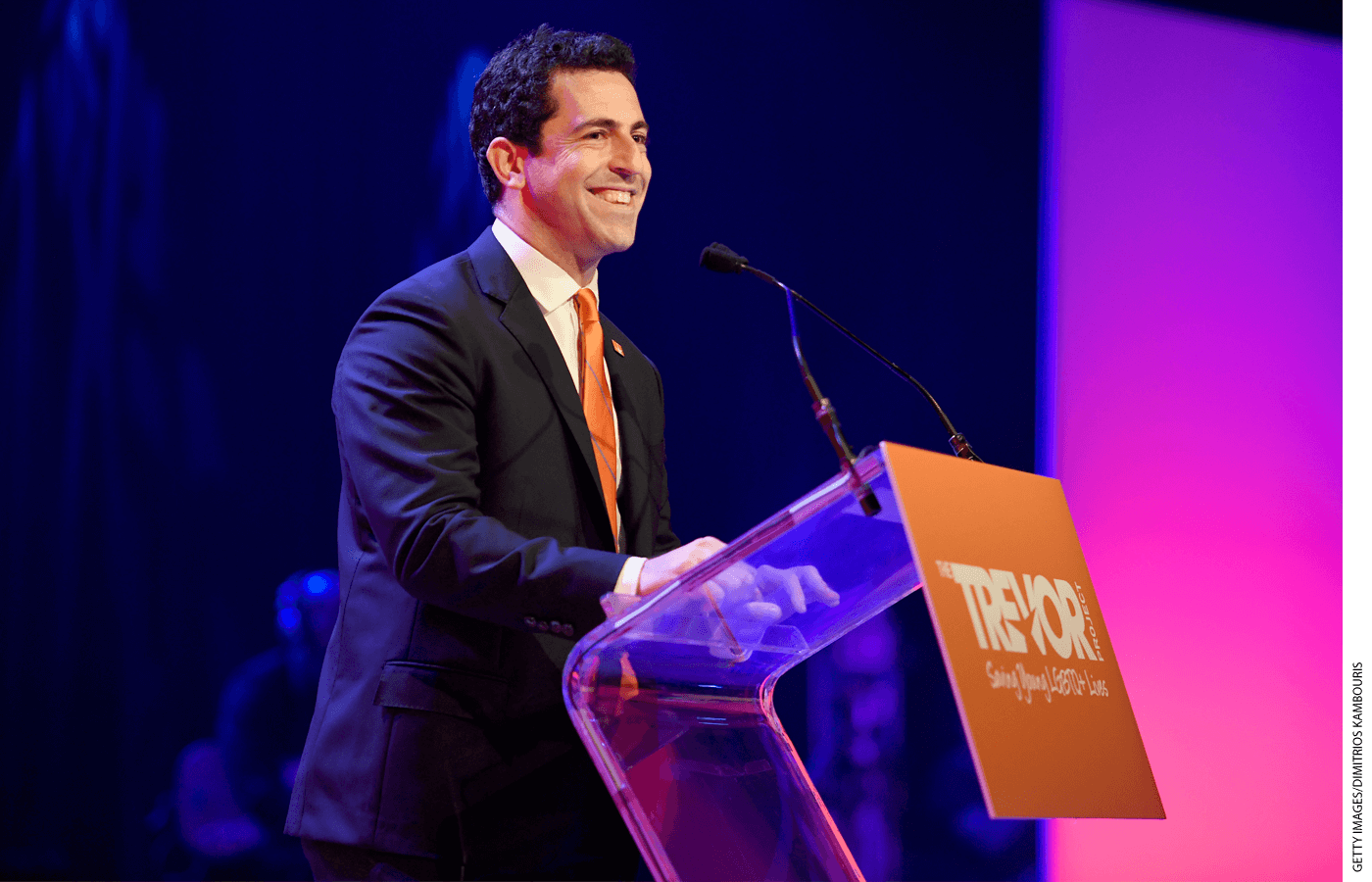
Advocates say that makes the case for better training, and for more actual counselors in schools. Amit Paley, the CEO and Executive Director of The Trevor Project, the world’s largest suicide prevention and crisis intervention organization for LGBTQ+ youth, said in an interview: “We should not be training teachers to replace counselors, but they can be helpful at identifying warning signs and may act as supporters for their students.”
“Having a teacher recognize something is wrong, listen to their struggle, ask about suicidal thoughts, and refer them to the right resources is not replacing the role of a specialist or counselor, it is pointing them in the direction to receive what is necessary,” Paley said. He said that for LGBTQ+ youth, having even one supporting adult can reduce risk of suicide by 40 percent.
The Jed Foundation’s Gorman expressed a similar view on the proper role of teachers. “Teachers are not responsible for counseling or treatment. In fact, they are discouraged from that because they are not trained,” she said. “But it is their responsibility to notice when students are struggling. …just noticing, being able to gently mention something, bring it to the attention of whoever needs to be involved, is reasonable.”
Among the main mental health training programs available for nonspecialists is the Youth Mental Health First Aid course. Offered both through schools and at public libraries nationwide, this one-day workshop guides non-mental-health professionals who regularly work with youth, making it a strong program for both teachers and at-home caregivers alike. Conceptually, mental health first-aid parallels physical first aid. With basic training, teachers should have the ability to be responsive to situations on a case-by-case basis, know the signs of and techniques to resolve panic attacks, and foster a safe and compassionate learning environment. While the teaching job lends itself to providing a certain level of support for their students, Broome emphasizes that teachers are “by no means expected to treat serious mental health any more than they are to set a broken bone.” School-based mental health professionals such as school psychologists, school social workers, and guidance counselors are there both to train teachers and to take control of situations that surpass the “first aid” level.
Several evaluations of school-based suicide prevention programs, such as the Signs of Suicide program, have found school staff say they were generally useful. In such programs, students learn techniques like ACT (acknowledge, care, tell) to identify and respond to warning signs.
The scarcity of trained mental health professionals is a common theme—and complaint—among those who work in this policy area.
“There is a shortage of well-trained mental health providers,” Graczyk said. “How do we ensure that we have adequate numbers? We don’t have enough well-trained mental health providers in the schools right now.”
The Trevor Project’s Paley said his organization often hears about staffing ratios “that are unacceptable and terrifying — students coming to their educators with urgent mental health problems are told to wait three months to get 20 minutes of help.”
A federal survey conducted during the 2017-2018 school year found 40.5 percent of schools said “inadequate access to licensed mental health professionals” was a major factor limiting their efforts to provide mental health services. A federal survey conducted during the 2015-2016 school year found public schools that employ psychologists averaging about one psychologist for every 820 students, and public schools that employ social workers averaging about one social worker per 700 students. Advocacy groups and professional trade associations say the ratios should be lower. But it’s not as if there are tens of thousands of unemployed school psychologists or social workers waiting around looking for jobs; licensing requirements vary by state but typically involve a graduate degree and supervised clinical training. Moving more mental-health professionals into schools might mean moving them away from other areas, like substance abuse counseling or caring for veterans, where they are also needed.
Psychologists working in elementary and secondary schools earn an annual average wage of $80,960 a year, according to the Bureau of Labor Statistics. That’s less than they might earn working in other settings, though the health, vacation, and retirement benefits and the stability of a school-based job mean that wage comparisons tell only part of the compensation story.
A professor of psychiatry and psychology at the University of Illinois at Chicago and the director of its Institute for Juvenile Research, Marc Atkins, agreed that there is a lack of mental health providers. Atkins, though, made an analogy with surging juvenile diabetes cases to argue that there are possible alternative strategies to address the concerns. “We can decide we need more endocrinologists, or we can increase exercise and better diet.” In an interview and in a 2017 Annual Review of Clinical Psychology article, Atkins makes the case that positive classroom relationships, strong home-school partnerships, high-quality instruction, classroom behavior management that promotes safe and productive peer and adult interactions, and even working to reduce teacher stress (and improve teacher mental health) may help reduce the need for referrals to more intensive, expensive services. In a test of this approach in Chicago schools, Atkins tried daily report cards to increase family involvement, implemented a classroom management technique in which students competed in teams as part of a “Good Behavior Game,” and used Medicaid funds to pay “parent advocates” to help families with logistical planning and overcoming obstacles. The study, conducted by Atkins and colleagues, found largely positive outcomes.
Atkins made another medical analogy—between mental health and heart health. “Most people confuse mental health with mental illness,” he said. “If you think about mental health the way we think about heart disease, we wait to fail when it comes to mental health rather than preventing it in the first place.”
Stresses and anxieties are normal, Atkins said, and it’s not their absence that makes us happy but rather the presence of productive coping skills. “What if we reframe around helping schools be the best they can be, supporting the predictors of successful schooling as a vessel for positive mental health outcomes?”
Perhaps an eventual improvement in youth mental health will come by using this preventive “better schools” approach pioneered in Chicago. Perhaps it will come by using the tens of billions of dollars in federal Covid relief funds to follow the Louisiana pattern of increasing by nearly 800 percent the number of school-based counselors, at least for as long as those funds last. Perhaps it will come via action in state capitals—Maryland, California, Colorado, and New Jersey all recently acted in different ways to address youth mental health, the 74 reported. Perhaps it will come through some combination of the approaches or by some other strategy or tactic yet to be widely implemented. Or perhaps the mental health emergencies trend will improve on its own as the pandemic recedes and students return to more normal social interactions and in-person learning (and teachers to in-person teaching). At best, it could be an opportunity for students to learn how to take care of themselves and others—skills that could be as useful, or more useful, than plenty of other material traditionally taught in the formal curriculum.
“Not all schools, but many schools have this sense that mental health is the domain of the counselors or the counseling staff…and it is not really thought to be the responsibility of all of the adults in the school as well as all of the students to take care of each other’s mental health,” said The Jed Foundation’s Gorman. That, she said, is shifting somewhat as schools increasingly focus on social-emotional learning. “It is a positive trend and speaks to a greater interest in emotional health.”
Peyton Elias is a student at Harvard College concentrating in psychology.
The post Schools Can Help with the Youth Mental Health Crisis appeared first on Education Next.
By: Peyton Elias
Title: Schools Can Help with the Youth Mental Health Crisis
Sourced From: www.educationnext.org/schools-can-help-with-youth-mental-health-crisis-shortages-counselors/
Published Date: Wed, 01 Dec 2021 10:00:49 +0000
News.... browse around here
Subscribe to:
Posts (Atom)